
Home > Analog Design
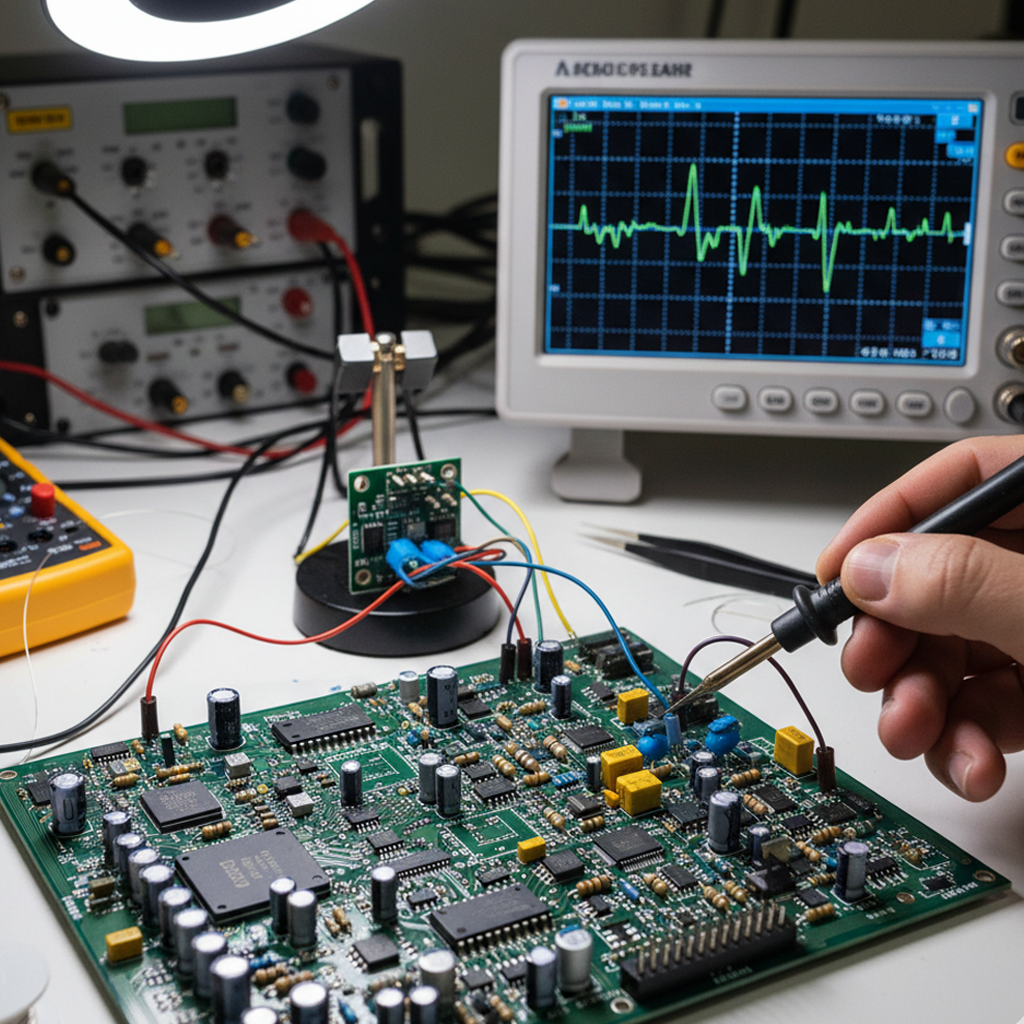
Analog hardware design is the art of the mathematically curious who can sustain themselves endlessly in front of an oscilloscope. Through analog design services, we create the finest custom low power as well as high speed analog designs for several tasks like metering, automotive, medical, military and scientific applications. Under our analog design services, the analog system is broken down into various blocks and for each block we work in consideration of the following points:

If your technology is draining resources rather than optimizing them, we can get you back on track. A professionally managed services provider can give you the decisive edge to:
This may require pre-amplifying and transporting sensitive signals such as those influenced by thermocouples, ultrasonic transducers, magnetic induction, optical induction, electric fields etc.
AGC is quite necessary in applications where signal strength may vary more than a few hundreds of order in amplitude. Light and ultrasonic signal detection are notable examples where an AGC block is indispensable.
These are ubiquitous in analog hardware and indispensable in low power systems where sharp digital filters may impose a power penalty due to time consuming computations.
Typically, Device Protection blocks comprises ESD protectors, Thermal switches, R-C Snubbers, MOVs, GDTs, Zeners, TVSes, crowbar structures, overvoltage and overcurrent protection circuits, inrush-current protection circuits and a combination thereof. Ascenten realizes their importance and has immense experience and analytical capabilities in building and testing rugged, reliable analog circuits that outperform the statutory immunity tests and the device’s expected lifetime.
Signal Generation is the art of generating analog voltage or current signals that resemble the desired waveform as closely as possible under constraints of allowable loading, power and cost. We’re able to design precise signals upto around 300 MHz by deploying a number of phase and frequency locking techniques under the constraints of
Over the years our engineers have developed a range of subtle tricks to achieve important goals. Some of these are described below:
A battery powered circuit was required to work at the full the battery voltage, however a series diode was necessary to prevent a charge reservoir discharging back to the battery. A zero voltage drop diode function was achieved using a combination of analog switches and current sensing techniques.
A battery powered circuit was required to output opto-isolated pulses to an external device which had an internal pull-up. Since opto-isolators are power hungry, they were not feasible. A low cost, low power technique was devised to harness power from the pull-up of the external device and provide power to the local pulse-output block.
An ultra low cost voltage boost function was implemented with only a few passives, using the system microcontroller itself as the boost controller.
A rugged, discrete transistor based amplifier in combination with an op-amp Schmitt trigger was designed to pickup capacitively coupled signals from metal plates attached to car injector cables. These signals can be destructive and reliability requirements were high.
An array of IR LEDs and Phototransistors were used to convert the mechanical movement of a pressure gauge into usable electrical signals. The result was an ultra low cost, mass producible electronic pressure gauge. This gauge is now under mass production.
Spice simulation of circuits is necessary when nonlinear elements are introduced. These elements lead to differential equations which are not solvable in closed forms. At Ascenten we use a range of spice tools as well as analog design services. We also study circuits to ensure that they perform as desired under various conditions.
4 µA from the external device. Thus, opto-isolation was successfully achieved with minimal power consumption.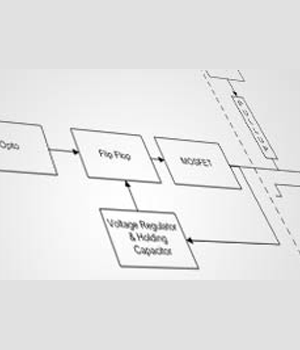
We would really like to hear from you and answer any questions. Please email us at info1@ascenten.net
or call us on
India Mobile: +91-89800 00973
India Landline: +91-79-2646 4646
Home | Careers | Ethics | Privacy Policy | Terms Of Use | Code Of Conduct

