Home > Feasibility Research
Feasibility research involves performing a list of pre-design activities and decisions that are critical to officially formulating the final expectation while documenting the design challenges and risks. It is essentially an innovative, brainstorming exercise forming clouds of ideas and rationally determining as to what makes sense in the product under the umbrella of customer expectation, budget and project deadlines. Under feasibility research we offer a suite of services:
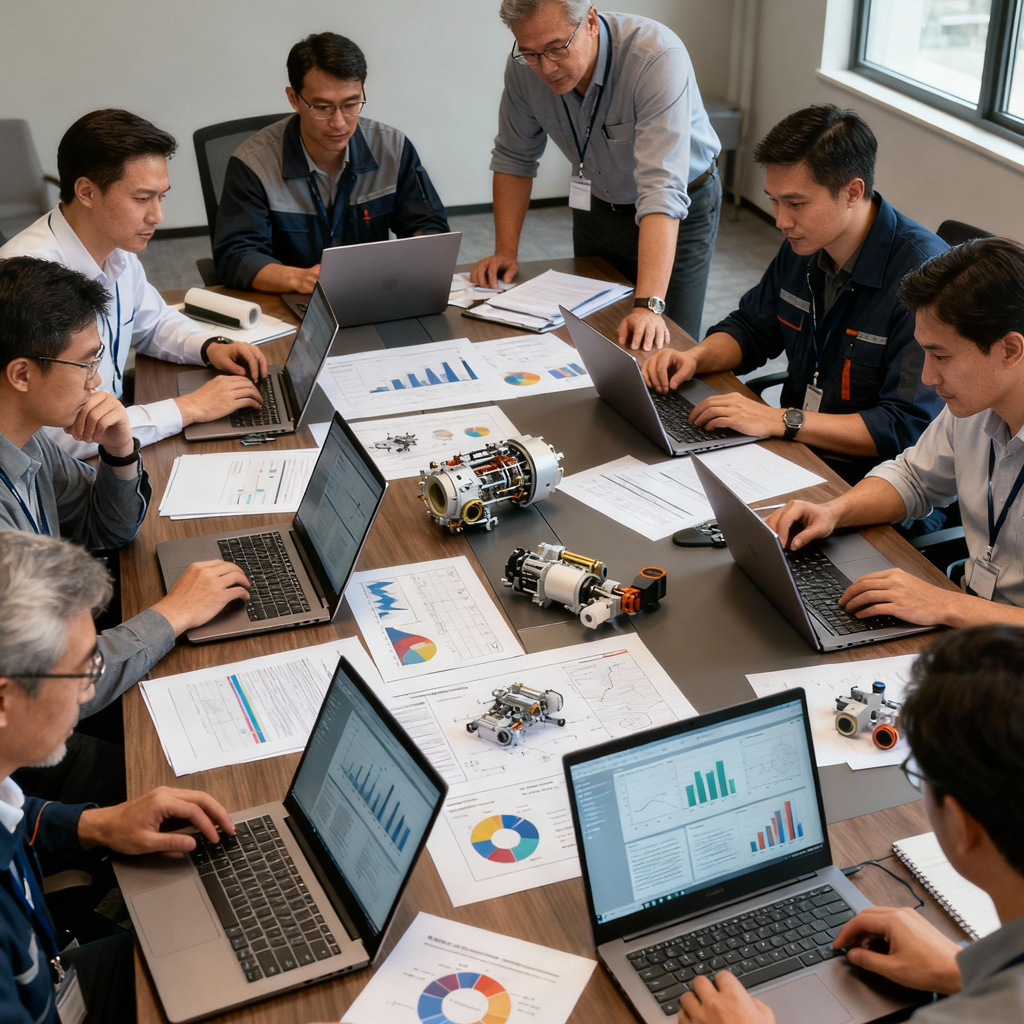

If your technology is draining resources rather than optimizing them, we can get you back on track. A professionally managed services provider can give you the decisive edge to:
This is a critical decision making process wherein we step in the shoes of the end customer to converge to a rational set of product features and functionality. Several questions are asked:
These can make a world of difference in market acceptability of a new product. Many markets behave strangely – contrary to common sense notions. For example, certain products might be accepted well only if they're bigger, even though a portable alternative is available for the same purpose. Indeed, different customer segments think differently and its wisdom at its best not to ignore even those customer wishes that are mumbled softly.
We leverage our palette of expertise and experience in a number of industry verticals to propose and evaluate emerging technologies for the suitability to the application in subject and the potential to create an early winning value differentiator.
Technical specifications are researched and documented from various perspectives including mechanical construction, environmental tolerance, ingress protection, electrical requirements, accuracy and errors, safety and immunity requirements, EMC requirements etc. Hard requirements necessitated by statutory standards are differentiated from soft requirements for efficient trade-off in future.
Competing technologies and platforms are compared to establish the most optimal choice for the problem on hand. Technologies range from wireless communications to real time operating systems to microprocessors and FPGAs. Technologies are compared in various aspects including power, speed, cost, licensing terms, safety certifications (e.g. SIL) vendor support, community support, performance track record and availability of associated tools.
Relevant patents are researched and identified and prospective patentable features are identified.
Analyzing what's already out there and succeeding in the market
This is the final step and once done, all earlier analysis performed independently and without bias can be re-thought from the perspective of existing competition.
A picture is worth a 1000 words and hence these are important to effectively communicate ideas and visualize the system from an engineering perspective. Project jargons and associated terminologies are well established at this time for effective communication between team members and with the customer.
Ballpark (+/- 30%) costs are evaluated based on preliminary discussions with prospective parts suppliers.
Analyzing and establishing various ball park milestones such as feasibility study end, start design, first prototypes, golden models, type approval, pilot batch production and testing, production start and production ramp-up.
Detailing feasibility research in a document and compiling results in an aesthetically pleasing audio-video presentation.


We would really like to hear from you and answer any questions. Please email us at info1@ascenten.net
or call us on
India Mobile: +91-89800 00973
India Landline: +91-79-2646 4646
Home | Careers | Ethics | Privacy Policy | Terms Of Use | Code Of Conduct

